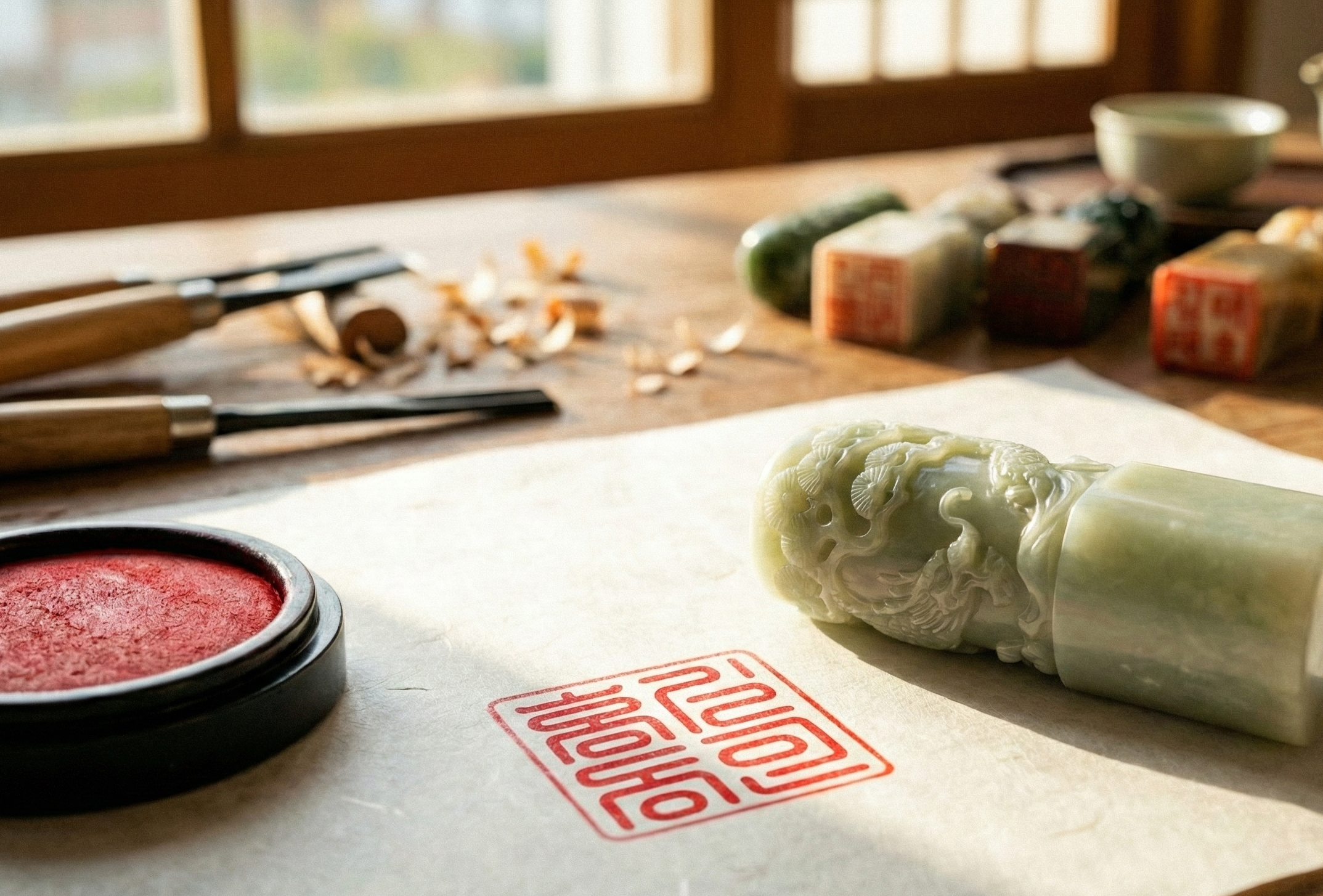

In South Korea, where contemporary life pulses alongside deep-rooted traditions, one cultural artifact quietly embodies identity, legality, and artistry: the Dojang (도장), or personal seal. While many visitors focus on iconic elements like kimchi or K-pop, the Dojang offers a uniquely authentic link to Korean heritage, serving as both a practical tool for daily life and an emblem rich with historical and cultural significance.
The Tangible Essence of the Dojang
A Dojang is far from a mere decorative object — it is a sensorial experience. Traditionally, these seals are crafted from materials such as jade, granite, marble, wood, or even animal horn, each lending a distinctive texture and weight. Holding a Dojang reveals its smooth, cool surface, a tangible connection to the owner’s identity. The seal’s face bears an intricate engraving of the owner’s name, usually in Hangul — Korea’s native script — or sometimes Hanja (Chinese characters). These carvings are not only practical but often artistic, occasionally featuring symbolic motifs like dragons or phoenixes that add layers of meaning. When stamped, the deep red ink called inju (인주) imparts a subtle earthy fragrance, completing the multisensory signature moment.
Artistry and Tradition in Craftsmanship
The making of a Dojang is a meticulous craft preserved over centuries. While commercial versions exist, the most revered seals emerge from the hands of skilled artisans known as jeongakga (전각가). Their expertise demands precision — each character is carefully reverse-carved to produce a perfect imprint. This process combines a mastery of calligraphy, steady handwork, and intimate knowledge of the material. Far from mass production, each hand-carved Dojang is a unique artistic creation, reflecting the artisan’s dedication and the cultural value embedded in every line and curve.
Ubiquity and Legal Standing in Modern South Korea
Unlike a simple handwritten signature, the Dojang’s impression is legally binding and widely trusted across Korea’s administrative, financial, and legal sectors. It authenticates everything from bank accounts and real estate contracts to official documents and parcel receipts. Most Korean adults own at least one personal Dojang, sometimes inherited or gifted to mark major life milestones such as coming of age or marriage. Despite the global shift toward digital identity verification, the physical Dojang remains integral to Korean daily life — a bridge between tradition and modernity.
Historical Roots and Contemporary Significance
The practice of using personal seals in Korea is deeply rooted in history, becoming widely established as early as the Three Kingdoms period (around the 1st century BCE). Originally reserved for royalty and officials to validate decrees and correspondence, seals symbolized authority and social rank. Over time, particularly through the Goryeo and Joseon dynasties, seals became widespread among literati and artists for authenticating literary and artistic works. The shift toward popular usage accelerated during the late Joseon era and Japanese colonial period, when Korea adopted more standardized personal identification methods. This democratization transformed the Dojang into an everyday necessity, reflective of evolving social practices.
Today, the Dojang remains a vibrant emblem of personal and cultural identity. Beyond its functional use, many Koreans treasure their seals as heirlooms or meaningful gifts, embodying individual journeys, family heritage, and Korea’s aesthetic sensibilities. For travelers and enthusiasts, commissioning a custom Dojang offers a rare window into Korean crafts and traditions—a personalized keepsake woven into the fabric of daily life.
Engaging with a Dojang is to feel the pulse of Korean culture beneath your fingertips—a tactile reminder of history, identity, and artistry grounded in everyday moments. To truly appreciate South Korea beyond its surface, consider acquiring or exploring the story of a Dojang as a way to connect deeply with a culture where tradition continues to shape the present.
Curator’s Notes & Sources:
This insight was developed through rigorous cultural research and authentic local analysis. Explore the deeper context via the original links below: